
Keith County Civil Docket Searches
Remote docket searching in Keith County begins with the Nebraska JUSTICE public name search. Type a party name. The system returns a public case summary. You should check the caption, court, case number, and party role before digging further. A full name beats a fragment. The search terms warn that public results can lag behind new entries. A name search cannot tell you whether every document in the file is open to the public.
Copy a case number exactly as it appears. Nebraska numbering may combine several pieces. These can include a court indicator, county information, a type code such as CI, a year, and a sequence. A County Court civil case often carries a C. A District Court civil case often carries a D. Take the exact Keith County code straight from JUSTICE or confirm it with the clerk. Guessing invites errors.
- Search JUSTICE by a party name, then refine by county, court, year, or case type only when the results need separation.
- Open the matching Keith County civil case and record the case number, caption, court, and latest Register of Actions entry.
- Check the Multi-Court Case Calendar if the immediate question is an upcoming hearing rather than a past filing.
- Call or visit the appropriate clerk for a record copy, certification, restricted-file question, or an entry that needs current confirmation.
Note: A JUSTICE case summary and the local Keith County civil case file are linked but separate records. The summary points to the file; it never replaces it.
Keith County Civil Jurisdiction Limits
Keith County Court is where many civil matters begin. Small claims, probate, guardianship, conservatorship, adoption, and a range of other civil cases start there. The Judicial Branch announced changes effective July 1, 2025. Small claims rose to $7,500. The applicable concurrent county-court civil jurisdiction can reach $70,000. Those figures set ceilings, not automatic rules. A case below a dollar limit does not automatically belong in Keith County Court. Venue, subject matter, party choice, and statutory exceptions all still shape where a filing lands.
| Keith County Court | Keith County District Court |
|---|---|
| Small claims, probate, guardianship, conservatorship, adoption, and many civil matters begin here. | Broader civil litigation and matters outside County Court jurisdiction are heard here. |
| Small claims ceiling: $7,500 effective July 1, 2025. | May hold a related civil record when the case requires the broader trial court. |
| Applicable concurrent civil jurisdiction can reach $70,000, subject to the governing rules. | Holds its own case number, case file, and Register of Actions. |
The Judicial Branch jurisdiction notice sets out the new limits and their effective date.
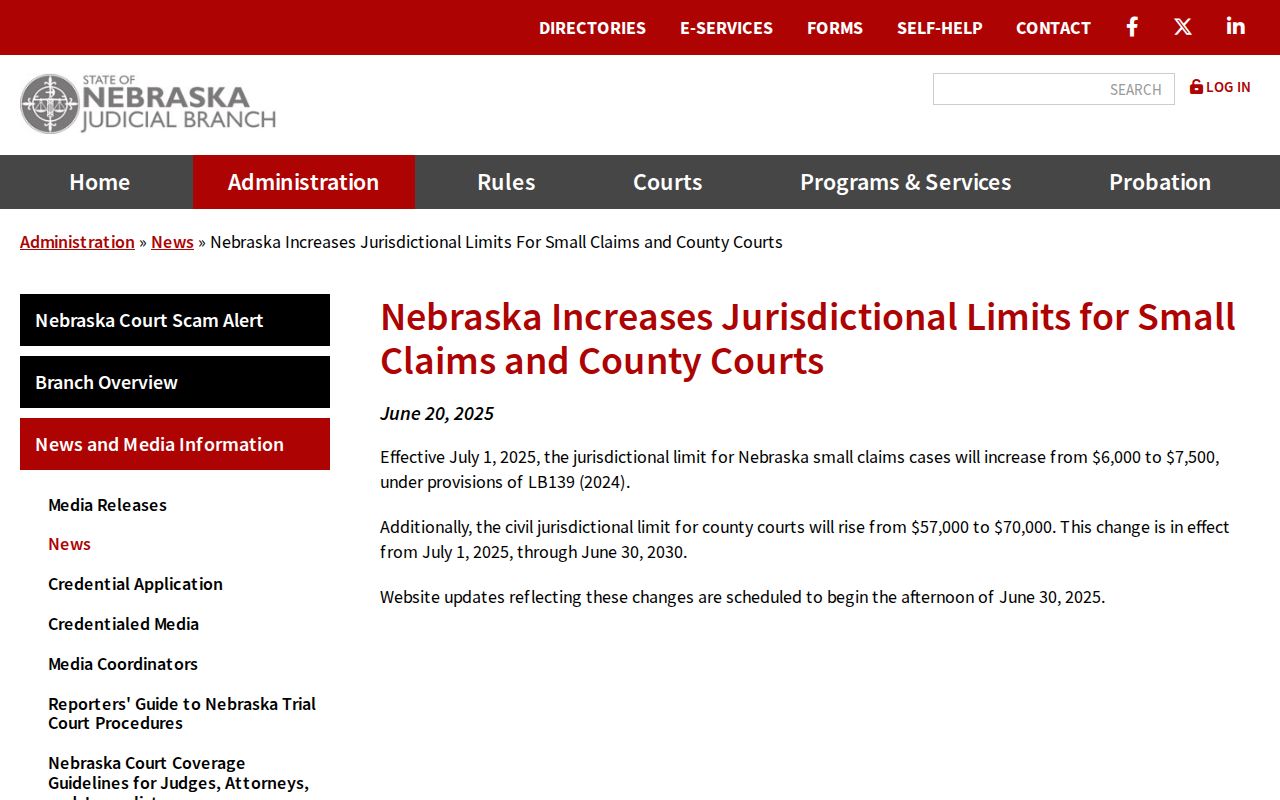
For a Keith County docket search, picking the right court is a practical first step. Save it for later and you may search the wrong docket entirely.
Civil Dockets: What They Show
Read a Keith County civil docket from the caption and party roles forward. The case summary may list the court, case type, judge, filed and closed dates, and disposition. The Register of Actions comes next. It records the procedural sequence. That sequence can include a complaint or petition, summons, return of service, motion, order, judgment, notice, payment, and post-judgment entry. Before calling a case finished, read the last substantive event on the docket. An early entry rarely tells the whole story.
| Caption and roles | Names the case and identifies plaintiff, defendant, petitioner, respondent, creditor, debtor, or another displayed role. |
|---|---|
| Case details | Case number, court, judge, classification, filed date, closed date, and public disposition. |
| Filings and service | Complaint, petition, answer, summons, return, motion, affidavit, order, and image identifier when available. |
| Judgment and payments | Judgment, costs, financial activity, receipts, and court payments when the public detail displays them. |
| Register of Actions | A chronological log with entry dates, type, initiator, image or document number, and service method where shown. |
The JUSTICE public demonstration shows the field model a visitor will meet: judgment areas, payment areas, and the chronological entries that make up the docket itself.
The Nebraska Judicial Branch e-filing information lays out the attorney filing route, which sits apart from the public case-information route.
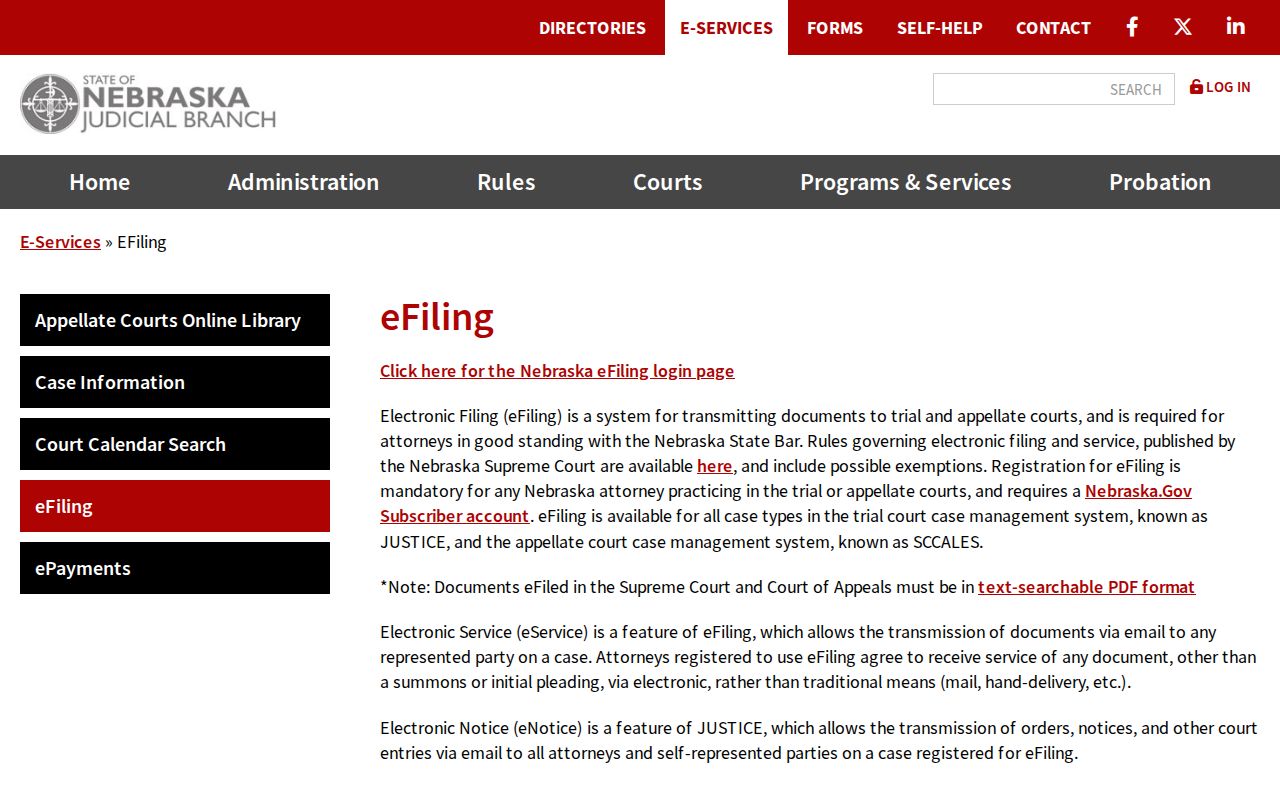
A Keith County search result may point to a filing path. That does not mean every exhibit or attachment sits in a public image collection.
Keith County Civil Party Terms
Party labels tell you what each name is doing in a Keith County civil case. A plaintiff starts the claim. A defendant responds to it. A petitioner asks the court for relief in a petition-based matter. A respondent answers that request. Captions can be short. Matching a name to its role helps you tell a participant apart from counsel or another listed person.
- Judgment
- The court's formal decision establishing an obligation, determination, or recorded outcome.
- Default judgment
- A judgment entered when a party does not respond or appear as the rules allow.
- Satisfaction
- An entry showing that a judgment or obligation has been satisfied as recorded.
- Garnishment
- A post-judgment process directed toward collection of an obligation.
These labels describe docket activity. Read them with the entry date, court, and related order, since a Keith County case can carry several filings on one day.
What Cases Fill the Civil Docket
The Keith County civil docket spans several public case categories. The court holding the matter shifts with type and jurisdiction. County Court is the main entry point for small claims, probate, guardianship, conservatorship, and adoption. District Court handles broader civil litigation and other matters assigned to it. Read an online result by type and court. A dollar figure will not tell you where the case lives. Familiar caption words alone will not either.
| Case category | Keith County docket context | Useful next detail |
|---|---|---|
| Small claims | County Court; noncriminal disputes for money owed, property damage, or return of personal property. | Read the caption, filed date, judgment, and any satisfaction entry. |
| Probate or protective matter | County Court starting point for probate, guardianship, and conservatorship. | Confirm public access before requesting a document. |
| Broader civil litigation | District Court when the matter is outside County Court jurisdiction. | Review the latest filing and the district Register of Actions. |
The Nebraska small-claims resource describes the current limit, forms, service, fees, and venue cautions.
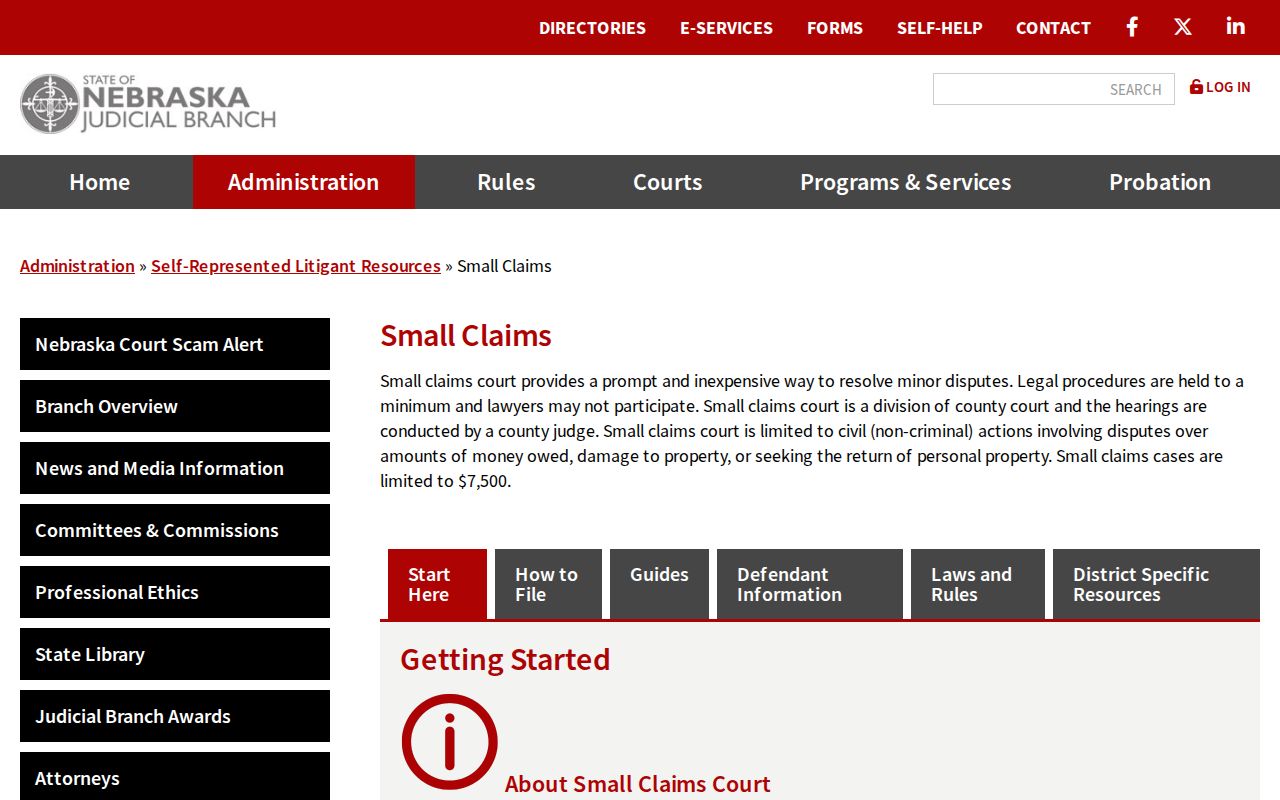
Forms can help with a filing. Remember that e-filing access and public docket access are two different routes into the Keith County court record.
Keith County Civil Filing Index
The Keith County District Court clerk runs a record process. It receives pleadings, records them, retains them, scans or microfilms them, indexes them, and enters them into JUSTICE. This matters for docket readers. A public entry may name the event and the image number. It will not open every item sitting in the local case file. Think of the case summary as a search layer. The clerk's file is where you request a named filing or a certified copy.
Registered attorneys and other authorized filers use Nebraska eFiling, as applicable. It is not a public docket-search portal. For a public Keith County civil record, use JUSTICE for the case lead. Use the calendar for a setting. The clerk handles a copy or an access question.
The Nebraska eFiling service shows the filing route, which stays distinct from public court-record access.
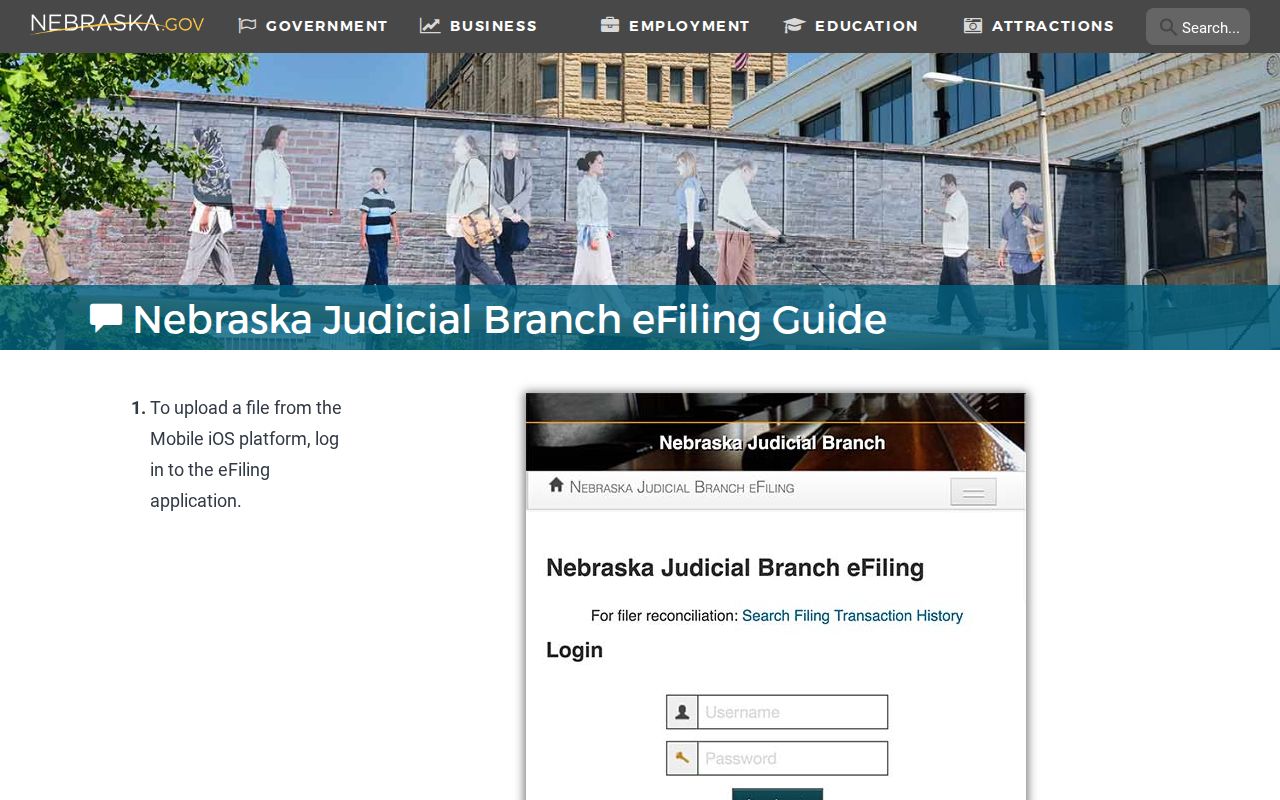
Not every Keith County civil filing image shows up online. Ask the Keith County clerk for the case number, the document you want, and its date range.
Hearings on the Civil Docket
A civil docket can hold many event types. A hearing setting, motion hearing, trial, notice, continuance, or order may all appear on one. The setting itself is not a final judgment. For a Keith County court date, open the Multi-Court Case Calendar and choose County Court with Keith County, or District Court with the correct district, then confirm the displayed date against the notice, the order, or the clerk. A last-name search needs at least two letters.
Keith County Court sits in Room 105 at 511 North Spruce Street and lists 308-284-3693. Keith County District Court is in Room 202 at the same Ogallala address, with 308-284-3849. When a civil setting looks like it moved, call the right office before you drive over. The Keith County court schedule walks through the full calendar lookup sequence.
Note: A calendar event shows a scheduled Keith County court activity, while a disposition answers what the court ultimately recorded.
Keith County Civil Docket After Judgment
A Keith County case marked closed can still pick up docket activity. The Register of Actions may record a satisfaction or garnishment. It may also record a continuing lien, release of garnishment, payment, or another post-judgment event. Start with the last substantive filing. Then compare the public disposition with the financial information. One later entry can shift what an older judgment means in practice. It does so without reopening the underlying dispute.
Never shrink a docket to a bare list of dates. The official case-summary example pairs judgment and payment areas with the chronological record. That is why a recorded satisfaction matters when it lands after the main judgment.
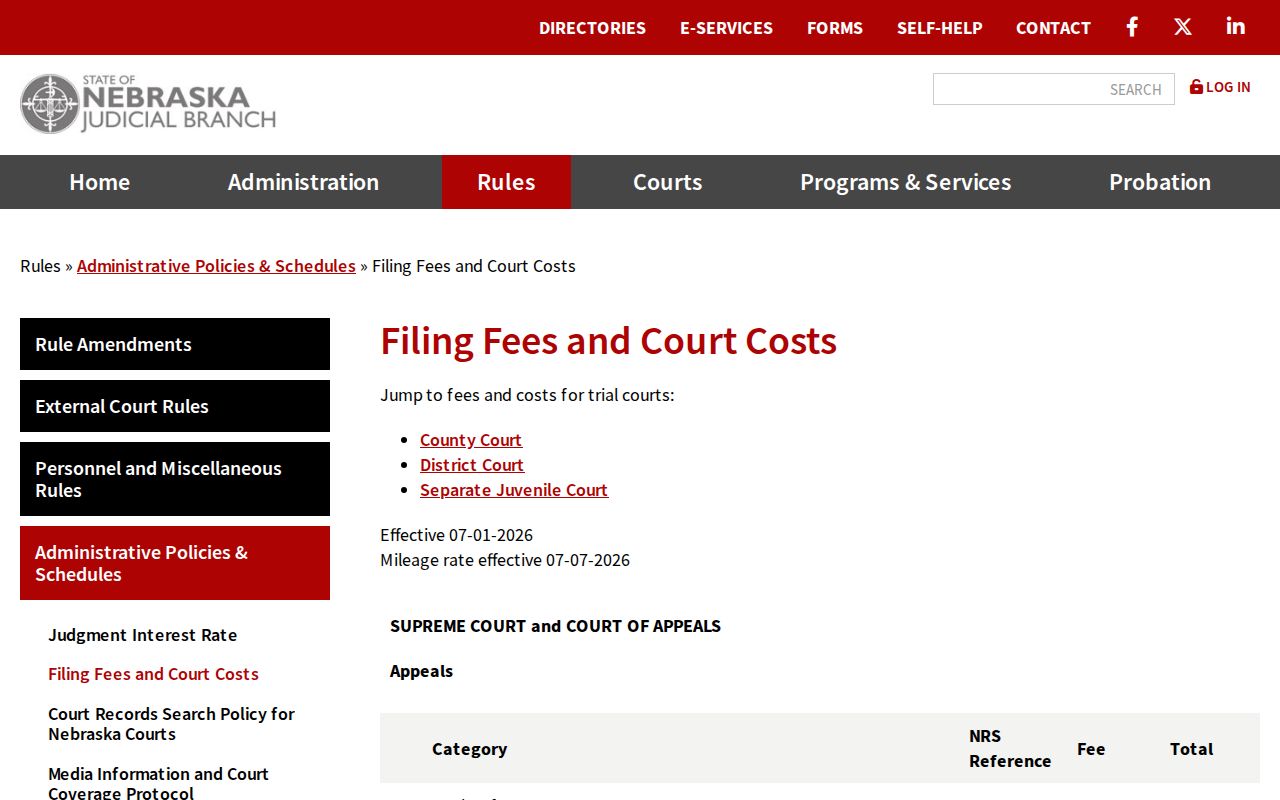
Court costs and record fees run case-specific. The current filing-fee and court-cost page shows the amounts the Judicial Branch applies. Check it when a cost or fee matters.
Sometimes the public entry is not enough proof. When a Keith County judgment record needs more, request the identified public document or a certified copy from the appropriate clerk.
Who Can See Civil Dockets
Nebraska public-access rules open most civil docket material to the public. Party indexes, case summaries, Registers of Actions, calendars, judgments, orders, and decrees are public unless a restriction applies. Access runs through three separate channels. Use the remote JUSTICE search, a courthouse terminal, or the clerk counter. A written request for a particular file works best when it names the court, case number, document type, and date range. The Nebraska Public Records Act supplies the general inspection and copying framework, subject to court rules and any sealed or confidential material.
Privacy in public civil files: Birth dates, gender, Social Security numbers, financial-account numbers, and similar protected information are kept out of the public version. Parties and lawyers have the redaction duty, and a confidential appendix can limit the public copy.
County Court Rule § 6-1464 and District Court Rule § 6-1521 address civil personal and financial information.
Call the courthouse offices directly with access questions. Keith County Court and Keith County District Court handle the public version of a record, certification requests, and any question about a restriction.
Keith County Civil Forms and Copies
The Judicial Branch posts small-claims forms. A blank form is not a completed Keith County docket entry. Run a public case search first. Use it to locate the case number. Then ask the clerk for the exact filing you need. Keith County offers no county-specific online form for a general court-record request. A written request works best when it plainly names the court, case, record, and date range.
For County Court file copies, plan on 25 cents per page. A $1 charge covers executing a certificate and affixing a seal. Confirm the current cost before you order a larger packet or a certified record. The Keith County District Court clerk page lists Tina DeVoe in Room 202, 511 North Spruce Street. It also gives 308-284-3849 and tdevoe@keithcountyne.gov for district-court business.
The Nebraska forms page is the official entry point for statewide court forms.
At the Keith County courthouse, ask the proper clerk in person. Staff can point you to the public terminal, explain the copy procedure, and confirm whether the civil document you want is available for release.